

Why Print on Demand Is Replacing Traditional Dropshipping
Print on Demand is rapidly becoming a stronger alternative to traditional dropshipping thanks to lower risk, automated fulfillment, custom branding opportunities, and scalable global sales systems. Discover why entrepreneurs are choosing Print on Demand platforms like Soocommerce to build inventory-free e-commerce businesses focused on long-term brand growth.

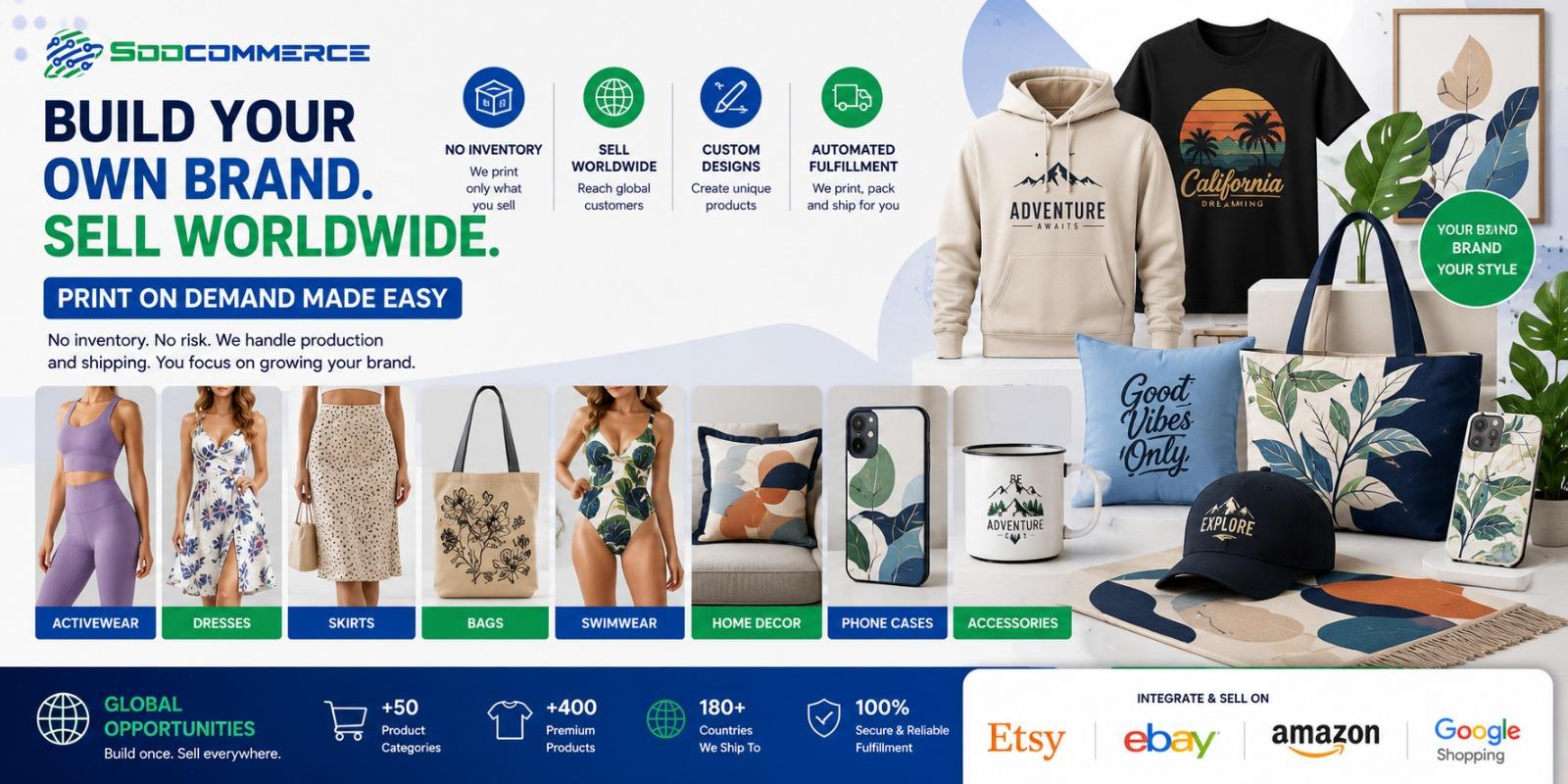
Why Print on Demand Is Replacing Traditional Dropshipping
The e-commerce industry has changed dramatically over the last few years. While traditional dropshipping once dominated the online business world, many entrepreneurs are now shifting toward the Print on Demand model. Sellers are looking for more control over branding, lower competition, automated operations, and sustainable long-term growth opportunities.
Today, Print on Demand offers a more flexible and scalable way to build an online business without holding inventory. Instead of selling generic mass-produced items from crowded supplier marketplaces, entrepreneurs can create branded products tailored to specific audiences. This is one of the major reasons why platforms like Soocommerce are helping businesses move toward modern Print on Demand e-commerce systems.
What Is Traditional Dropshipping?
Traditional dropshipping is a business model where sellers market products from third-party suppliers without keeping inventory. When a customer places an order, the supplier ships the product directly to the customer.
This model became popular because it allowed people to start online businesses with low upfront investment. However, as competition increased, many challenges began affecting profitability and sustainability.
How Traditional Dropshipping Works
The typical workflow looks like this:
- A seller imports products from a supplier marketplace.
- Products are listed on an online store.
- Customers place orders.
- The supplier fulfills the order.
- The seller earns the profit margin.
While this sounds simple, operational issues often appear as the business grows.
Common Problems in Traditional Dropshipping
Many sellers face challenges such as:
- Generic products
- Oversaturated markets
- Long shipping times
- Weak branding opportunities
- Low customer loyalty
- Quality control issues
- Supplier dependency
These problems have encouraged many entrepreneurs to search for a more sustainable business model.
What Is Print on Demand?
Print on Demand (POD) is an inventory-free e-commerce model where products are printed only after a customer places an order. Instead of selling generic supplier products, businesses create custom-branded designs for specific audiences.
This system is commonly used for:
- Apparel
- Hoodies
- Mugs
- Posters
- Tote bags
- Phone cases
- Wedding products
- Personalized gifts
The key advantage is that sellers can build a unique brand instead of competing with identical products found on thousands of stores.
How Print on Demand Works
The process is highly automated:
- A seller uploads custom product designs.
- Products are published on an e-commerce store.
- A customer places an order.
- The production partner prints the item.
- Packaging and shipping are handled automatically.
- The order is delivered directly to the customer.
This automation reduces operational complexity significantly.
Why Print on Demand Is Growing Faster
Modern consumers increasingly prefer customized and niche-focused products. Instead of buying generic items, people are searching for products that reflect personality, hobbies, emotions, or lifestyle interests.
This shift has made Print on Demand more attractive than traditional dropshipping.
Why Print on Demand Is Replacing Traditional Dropshipping
The replacement is not happening because dropshipping completely stopped working. Instead, entrepreneurs are moving toward models that offer stronger branding potential and more sustainable growth.
Better Branding Opportunities
One of the biggest weaknesses of traditional dropshipping is the lack of brand identity.
Generic Products Create Weak Brands
Many dropshipping stores sell identical products from the same suppliers. Customers can easily compare prices across multiple stores, which reduces loyalty.
Print on Demand changes this completely.
With custom-designed products, businesses can create:
- Unique branding
- Emotional customer connections
- Community-focused products
- Recognizable visual identity
This makes long-term scaling more realistic.
Why Branding Matters in 2026
Modern e-commerce is no longer only about selling products. Customers want experiences, identity, and trust.
Strong branding improves:
- Repeat purchases
- Customer trust
- Social media engagement
- Organic marketing performance
- Long-term business value
Platforms like Soocommerce focus heavily on helping businesses create brand-focused e-commerce stores rather than simple product catalogs.
Lower Competition Compared to Traditional Dropshipping
Traditional dropshipping became highly saturated over the years.
Oversaturated Supplier Products
Many dropshipping sellers import the same trending products from large supplier platforms. This creates intense price competition.
As a result:
- Profit margins decrease
- Advertising costs increase
- Customer trust weakens
Print on Demand reduces this problem because product designs are customized.
Niche-Based Selling Creates Better Positioning
POD businesses often target specific communities such as:
- Pet lovers
- Fitness enthusiasts
- Gamers
- Travelers
- Brides and wedding audiences
- Minimalist fashion consumers
Niche targeting improves conversion rates and creates stronger customer engagement.
Easier Long-Term Growth
Traditional dropshipping often depends heavily on short-term advertising trends.
Why Many Dropshipping Stores Fail
Some stores focus only on viral products instead of building brand value. When advertising costs rise or trends disappear, the business struggles.
Common problems include:
- Unstable product demand
- Supplier inconsistency
- Weak customer retention
- No real brand identity
Print on Demand Encourages Brand Building
Print on Demand businesses are often designed around long-term audience targeting.
Instead of constantly chasing viral products, sellers can:
- Build communities
- Launch collections
- Create seasonal products
- Expand into multiple niches
This creates a more stable business structure.
Better Customer Experience
Customer experience is becoming increasingly important in global e-commerce.
Personalized Products Feel More Valuable
Custom-designed products often create stronger emotional connections than generic imports.
For example:
- A custom wedding hoodie feels more personal than a generic hoodie.
- A pet-themed mug with emotional messaging creates stronger engagement.
- A niche fitness design can connect directly with a specific audience.
This emotional factor increases perceived product value.
Professional Store Infrastructure Matters
Modern customers expect:
- Mobile-friendly websites
- Fast navigation
- Professional branding
- Secure payment systems
- Clear product descriptions
Soocommerce helps simplify these technical requirements by offering ready e-commerce infrastructures optimized for global sales.
Print on Demand vs Traditional Dropshipping
Both business models offer inventory-free selling, but their long-term advantages differ significantly.
| Feature | Print on Demand | Traditional Dropshipping |
|---|---|---|
| Inventory Required | No | No |
| Branding Potential | High | Low |
| Product Uniqueness | Strong | Weak |
| Competition Level | Moderate | High |
| Customer Loyalty | Stronger | Weaker |
| Product Control | Higher | Limited |
| Scalability | Brand-focused | Trend-focused |
Advantages of Print on Demand
- Custom product branding
- Better niche targeting
- Stronger customer loyalty
- Automated fulfillment systems
- Easier long-term scaling
- Lower dependency on generic suppliers
Advantages of Traditional Dropshipping
- Faster product importing
- Larger product catalogs
- Easier trend testing
- Minimal design requirements
However, many sellers now prioritize sustainability and brand growth over short-term product trends.
Why Automation Is Important in Modern E-Commerce
Automation has become one of the biggest competitive advantages for online businesses.
Automated Production and Shipping
Print on Demand systems automatically:
- Process orders
- Print products
- Package items
- Ship globally
This reduces operational workload significantly.
Marketplace Integrations Simplify Growth
Modern platforms integrate directly with:
- Etsy
- eBay
- Google Shopping
- Facebook Catalog systems
These integrations allow businesses to reach international buyers more efficiently.
Why Global Selling Is Easier Today
The rise of cross-border e-commerce has increased opportunities for inventory-free businesses.
Entrepreneurs can now sell:
- To the United States
- Across Europe
- To international niche communities
- Through multiple marketplaces simultaneously
This global accessibility is one reason why Soocommerce focuses heavily on scalable international sales systems.
Common Mistakes When Transitioning from Dropshipping to POD
Some entrepreneurs misunderstand how Print on Demand should work.
Treating POD Like Generic Dropshipping
Uploading random designs without branding strategy usually creates weak results.
Ignoring Niche Research
A successful POD business requires audience understanding.
Weak Product Descriptions
SEO-friendly product content improves:
- Organic visibility
- Marketplace rankings
- Customer trust
Overcomplicated Designs
Simple and audience-focused designs often outperform visually crowded products.
Checklist for Starting a Print on Demand Business
Before launching your store, review this checklist:
- Choose a niche audience
- Create brand-focused product designs
- Build a professional e-commerce website
- Optimize product descriptions for SEO
- Set up Etsy integration
- Configure eBay integration
- Connect Google Shopping
- Prepare social media branding
- Test mobile compatibility
- Launch marketing campaigns
A structured launch process reduces mistakes and improves scalability.
How Soocommerce Supports Modern Print on Demand Businesses
Modern entrepreneurs often want an all-in-one solution instead of managing multiple disconnected systems.
Ready E-Commerce Infrastructure
Soocommerce provides:
- Professional store setup
- Mobile-friendly design
- SEO-ready product structure
- Global marketplace integrations
This helps simplify technical management for beginners.
Automated Fulfillment Systems
Orders can be processed automatically after purchase, reducing manual workload.
Marketplace Integration Support
Integrated systems help sellers connect products with:
- Etsy
- eBay
- Google Shopping
- Facebook Catalogs
This creates a centralized selling infrastructure.
Brand-Focused Business Model
Unlike many generic dropshipping systems, Soocommerce focuses on helping entrepreneurs build long-term branded businesses.
The Future of Inventory-Free E-Commerce
The future of e-commerce is increasingly focused on personalization, automation, and branding.
Consumers are becoming less interested in generic products and more interested in:
- Personalized products
- Emotional branding
- Niche communities
- Unique product experiences
Print on Demand aligns naturally with these trends.
At the same time, improvements in automation and marketplace integration continue making POD businesses easier to scale globally.
FAQ
Is Print on Demand better than traditional dropshipping?
For many entrepreneurs, yes. Print on Demand offers stronger branding opportunities and lower product competition compared to generic dropshipping products.
Can I start Print on Demand without inventory?
Yes. Products are printed only after orders are placed, so inventory is not required.
Why is traditional dropshipping becoming harder?
Competition, supplier saturation, longer shipping times, and weak branding opportunities have made traditional dropshipping more challenging.
Which products work best for Print on Demand?
Popular products include apparel, mugs, tote bags, posters, wedding items, and personalized gifts.
Do I need technical experience to start?
No. Platforms like Soocommerce simplify the setup process with ready e-commerce infrastructure and integrated systems.
Can Print on Demand scale into a real brand?
Yes. Many successful POD businesses focus on niche branding, community targeting, and long-term customer loyalty.
Share this post:
Related Posts

Ready to start your Print on Demand journey? Discover how Soocommerce helps entrepreneurs launch a p...
Discover why thousands of entrepreneurs are switching to Print on Demand eCommerce. Learn how this l...
Ready to launch your dream Custom Products Store? Discover how Soocommerce helps entrepreneurs build...