
Why Smart Entrepreneurs Prefer POD Over Dropshipping
Discover why smart entrepreneurs prefer POD over dropshipping for building scalable online businesses. Learn how Print on Demand offers better branding, automated fulfillment, lower inventory risk, and stronger long-term growth opportunities through platforms like Etsy, eBay, Google Shopping, and Soocommerce.


Why Smart Entrepreneurs Prefer POD Over Dropshipping
The world of online business continues to evolve rapidly, and entrepreneurs today have more opportunities than ever before. Among the most popular business models, Print on Demand and dropshipping are often compared because both allow people to start selling online without holding physical inventory. However, more business owners are now shifting toward POD because it offers stronger branding opportunities, better customer experiences, and more sustainable long-term growth.
Why smart entrepreneurs prefer POD over dropshipping comes down to one major factor: control. While traditional dropshipping often relies on reselling generic products from large supplier catalogs, the Print on Demand model allows entrepreneurs to create unique branded products that stand out in competitive markets.
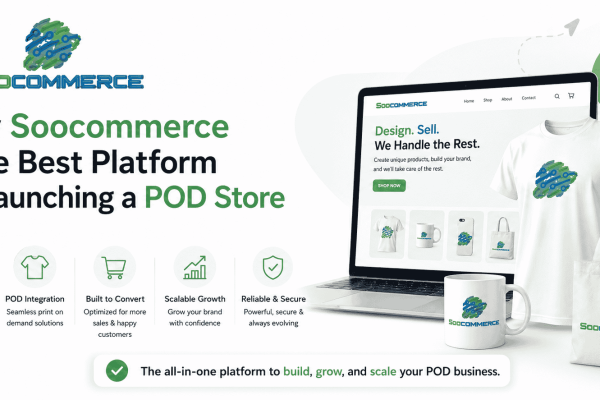
With modern e-commerce infrastructure solutions like Soocommerce, entrepreneurs can launch professional POD stores, integrate products into marketplaces such as Etsy and eBay, and automate fulfillment systems without managing production or shipping operations manually.
As global e-commerce becomes more competitive, building a recognizable brand matters more than ever. This is one reason why the Print on Demand model continues gaining popularity among modern online business owners.
Understanding the Difference Between POD and Dropshipping
Before comparing the advantages, it is important to understand how both business models work.
What Is Dropshipping?
Dropshipping is an e-commerce model where sellers market products supplied by third-party vendors. The seller does not store inventory. Instead, when a customer places an order, the supplier ships the product directly to the buyer.
Typical dropshipping products include:
- Electronics accessories
- Home gadgets
- Fashion items
- Kitchen tools
- Trending products
The model became extremely popular because of its low startup costs and accessibility.
What Is Print on Demand?
Print on Demand is a specialized fulfillment model where products are customized and produced only after a customer places an order.
Instead of selling generic supplier products, entrepreneurs create custom-branded items such as:
- T-shirts
- Hoodies
- Mugs
- Posters
- Tote bags
- Wedding products
- Fitness apparel
This gives sellers much greater control over branding and customer experience.
The Core Difference Between POD and Dropshipping
The main difference is product uniqueness.
In traditional dropshipping:
- Sellers often market identical products from shared supplier catalogs.
In Print on Demand:
- Entrepreneurs create personalized branded products that are harder to copy.
This distinction significantly impacts long-term business sustainability.
Why Smart Entrepreneurs Prefer POD Over Dropshipping
Modern entrepreneurs increasingly prioritize brand building instead of short-term product trends.
POD Creates Stronger Branding Opportunities
Branding is one of the biggest reasons why smart entrepreneurs prefer POD over dropshipping.
In dropshipping, many sellers compete using the exact same products. This often creates aggressive price competition.
With POD, businesses can create:
- Unique designs
- Personalized products
- Branded collections
- Niche-focused merchandise
This helps businesses stand out instead of competing purely on price.
Customers Prefer Personalized Products
Consumer behavior has changed significantly over the last few years.
Modern customers increasingly look for:
- Personalized experiences
- Creative designs
- Community-focused brands
- Identity-driven products
For example, customers may choose:
- niche fitness apparel
- custom wedding sneakers
- pet-themed clothing
- minimalist lifestyle merchandise
instead of generic products found everywhere online.
This trend strongly benefits the POD industry.
POD Reduces Product Saturation Problems
One major issue in dropshipping is market saturation.
Trending dropshipping products often become oversaturated very quickly because thousands of stores sell the same items simultaneously.
POD businesses avoid much of this problem because products are based on custom branding and creative positioning.
This creates stronger long-term differentiation.
The Branding Advantage of Print on Demand
Successful e-commerce businesses are increasingly built around brand identity rather than individual products.
Why Brand Identity Matters
Strong brands build customer trust and loyalty.
Businesses with clear branding often achieve:
- Higher repeat purchase rates
- Better customer retention
- Improved profit margins
- Stronger social media engagement
This is difficult to achieve when selling generic supplier products.
Niche Branding Creates Better Customer Loyalty
Many successful POD stores target specific niche communities.
Examples include:
- Gym motivation brands
- Pet owner merchandise
- Travel-inspired apparel
- Wedding product brands
- Gaming communities
Niche branding helps businesses connect emotionally with customers.
Professional Store Design Improves Trust
Customers judge online stores quickly.
Professional e-commerce stores usually include:
- Mobile-friendly layouts
- Professional product visuals
- SEO-optimized product pages
- Fast loading speed
- Consistent visual identity
Soocommerce helps entrepreneurs build these professional infrastructures for global e-commerce growth.
POD vs Dropshipping: Which Model Is More Sustainable?
Both models can generate revenue, but sustainability often depends on business structure.
| Feature | Print on Demand | Dropshipping |
|---|---|---|
| Product Originality | High | Low |
| Branding Potential | Strong | Limited |
| Market Saturation | Lower | Higher |
| Customer Loyalty | Better | Weaker |
| Startup Cost | Lower | Lower |
| Product Control | Higher | Lower |
| Trend Dependency | Medium | High |
Why POD Supports Long-Term Growth
Print on Demand supports long-term business growth because it focuses on brand development instead of temporary product trends.
This creates opportunities for:
- Community building
- Repeat customers
- Social media identity
- Higher perceived value
These factors help businesses remain competitive over time.
Why Many Dropshipping Stores Struggle
Many dropshipping stores rely heavily on viral trends.
Common problems include:
- Supplier quality issues
- Long shipping times
- Low customer loyalty
- Product duplication
- Intense advertising competition
Without strong branding, scaling becomes difficult.
How Automation Makes POD Easier Than Ever
Modern automation systems have simplified POD operations significantly.
Automated Fulfillment Systems
When customers place orders:
- Products are automatically printed
- Packaging is completed
- Shipping is processed
- Tracking systems are updated
This allows entrepreneurs to focus more on growth strategies instead of logistics.
Marketplace Integrations Increase Visibility
Marketplace integrations are critical for global reach.
POD businesses often integrate products into:
- Etsy
- eBay
- Google Shopping
- Facebook Catalog
These channels help businesses attract international customers more efficiently.
Global Selling Opportunities
Today, even small online brands can sell globally.
With the right infrastructure, businesses can target:
- United States markets
- European audiences
- International niche communities
Soocommerce helps simplify these processes through integrated systems designed for global e-commerce.
Why SEO Works Better for POD Brands
SEO is another major advantage for POD businesses.
Unique Products Create Better SEO Opportunities
Search engines prefer original content and unique product pages.
POD businesses can optimize:
- Custom product descriptions
- Niche keyword targeting
- Brand-focused landing pages
- Personalized category structures
This improves organic search visibility.
Generic Dropshipping Products Face SEO Challenges
Many dropshipping stores use identical supplier descriptions and images.
This creates problems such as:
- Duplicate content
- Weak search rankings
- Lower trust signals
Unique POD branding often performs better for long-term SEO growth.
Content Marketing Supports POD Growth
Many successful POD businesses use content marketing to build authority.
Examples include:
- niche lifestyle blogs
- trend guides
- product inspiration articles
- social media storytelling
This strengthens both SEO and customer engagement.
Common Mistakes Entrepreneurs Make
Even though POD offers strong advantages, mistakes can still limit growth.
Choosing Overly Broad Niches
Broad stores often struggle with branding.
Instead of targeting everyone, successful POD brands focus on specific customer identities and interests.
Ignoring Product Quality
Product quality still matters.
Businesses should carefully evaluate:
- print quality
- materials
- design positioning
- customer presentation
Strong branding must be supported by good customer experiences.
Underestimating Marketing Importance
Even the best products require visibility.
Successful entrepreneurs invest time into:
- SEO
- social media
- marketplace optimization
- paid advertising strategies
Marketing remains essential for growth.
Checklist for Building a Successful POD Business
Before launching a POD store, review this checklist carefully.
POD Business Checklist
- Choose a focused niche
- Create a strong brand identity
- Design professional product visuals
- Optimize SEO product descriptions
- Integrate Etsy and eBay
- Set up Google Shopping
- Prepare mobile-friendly store pages
- Configure payment systems
- Test user experience
- Create a marketing strategy
This structure helps businesses scale more effectively.
How Soocommerce Supports Modern POD Entrepreneurs
Launching a professional POD business requires multiple systems working together efficiently.
Soocommerce helps entrepreneurs simplify this process through integrated e-commerce infrastructure solutions.
Professional E-Commerce Store Setup
Entrepreneurs can access:
- Ready-to-launch online stores
- Mobile-friendly designs
- SEO optimization support
- Marketplace integrations
- Automated fulfillment systems
This reduces technical complexity significantly.
Product and Content Preparation
Professional product presentation matters in competitive markets.
Soocommerce supports:
- product content preparation
- SEO-friendly descriptions
- niche-focused store structures
- marketplace optimization
These elements improve store quality and customer trust.
Scalable Global Infrastructure
Modern e-commerce businesses need scalable systems.
Integrated infrastructures help businesses expand internationally without managing complicated operational processes manually.
The Future of POD E-Commerce
The future of e-commerce is increasingly focused on personalization, automation, and community-driven branding.
Personalized Commerce Will Continue Growing
Consumers increasingly prefer products aligned with their identity and interests.
This trend strongly supports:
- custom products
- niche branding
- creative merchandise
- personalized shopping experiences
Automation Will Simplify Operations Further
Automation technology continues improving:
- fulfillment systems
- advertising optimization
- product management
- customer targeting
This allows smaller businesses to scale more efficiently.
Community-Based Brands Will Become Stronger
Brands that build emotional connections with customers are likely to outperform generic online stores in the long term.
This is one reason why POD continues gaining momentum globally.
FAQ
Why do entrepreneurs prefer POD over dropshipping?
Many entrepreneurs prefer POD because it allows stronger branding, custom products, and lower product saturation compared to traditional dropshipping.
Is Print on Demand more profitable than dropshipping?
Profitability depends on branding, niche selection, and marketing strategy. However, POD often supports better long-term brand value and customer loyalty.
Do I need inventory for POD?
No. Products are only produced after customers place orders, which eliminates inventory storage requirements.
Which marketplaces work best for POD businesses?
Popular platforms include Etsy, eBay, Google Shopping, and integrated online stores.
Can POD businesses scale globally?
Yes. Automated fulfillment systems and marketplace integrations allow businesses to sell internationally without managing logistics manually.
Does Soocommerce support POD store setup?
Yes. Soocommerce provides professional e-commerce store setup, SEO optimization, marketplace integrations, and automated fulfillment infrastructure for POD businesses.
Share this post:
Artículos Relacionados

Ready to start your Print on Demand journey? Discover how Soocommerce helps entrepreneurs launch a p...
Discover why thousands of entrepreneurs are switching to Print on Demand eCommerce. Learn how this l...
Ready to launch your dream Custom Products Store? Discover how Soocommerce helps entrepreneurs build...